2010s Fashion: Hipster, Athleisure, and the Rise of Streetwear
The 2010s were the decade Instagram took over fashion. The smartphone (the iPhone arrived in 2007, Instagram in 2010) collapsed the distance between the runway and the street. Trends moved faster, lasted shorter, and reached more people. Streetwear absorbed luxury; activewear left the gym; and the term "influencer" stopped sounding like a joke.
The cultural backdrop
The 2010s opened in the long shadow of the 2008 financial crisis. Social media reshaped culture: Instagram launched October 2010, Snapchat in 2011, TikTok (then Musical.ly) in 2014. Fast fashion (Zara, H&M, ASOS, Forever 21) shortened the cycle from runway to high street to weeks; by 2015 Shein had begun importing the same model into ultra-fast online retail. Black Lives Matter (2013), the Arab Spring, the rise of populism, and the COVID-19 pandemic at the very end of the decade (early 2020) all left fashion fingerprints.
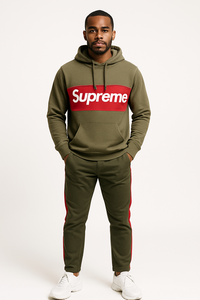
Three economic forces shaped what people actually wore. First, the influencer economy made street style — what real (and sponsored) people wore on Instagram — more important than runway photography. Second, streetwear (Supreme, founded 1994 in New York; Off-White, founded 2012 in Milan) collided with luxury, culminating in Louis Vuitton's 2017 Supreme collaboration. Third, athleisure made stretchy technical fabric acceptable in offices and restaurants for the first time.
Women's fashion: a decade in three acts
Hipster (2010–2013)
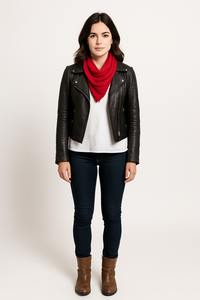
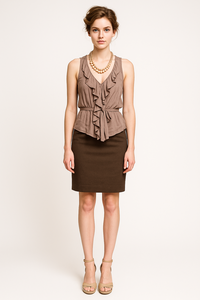
The earliest 2010s carried the late-2000s indie aesthetic into a softer, more curated form. Skinny jeans (now in every wash and color, including the briefly ubiquitous "jeggings"), oversized cardigans, plaid flannel shirts, knit beanies, statement scarves, vintage band T-shirts, ankle boots with a small heel, ballet flats, peplum tops, mustard-and-burgundy color palettes, and "blogger" Pinterest dressing. The early-2010s "boho" continuation — fringe, kimonos, fedoras — overlapped. American Apparel, Madewell, Urban Outfitters, and Free People were the era's defining mid-tier retailers.
Normcore and athleisure (2013–2017)
New York magazine's October 2014 article on "normcore" announced (or invented) a turn toward deliberately ordinary clothing — plain T-shirts, no-logo jeans, ugly dad sneakers (New Balance, Reebok Classic), pleated trousers, polar fleeces. Phoebe Philo's Céline (2008–2017) defined the era's high-luxury minimalism: no logos, perfect tailoring, beige, oxford-cloth shirts, the Trio bag, square-toe boots. At the same time, athleisure exploded. Lululemon's Align legging and the high-waisted yoga pant became standard daywear; sports bras and crop tops moved out of the gym. Sneakers replaced heels for almost every occasion.
Streetwear-as-luxury and Instagram aesthetic (2015–2019)
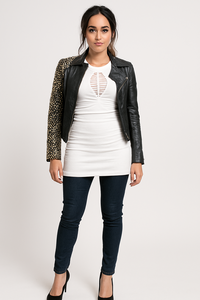
Virgil Abloh's Off-White, Demna Gvasalia at Vetements (oversized hoodies, DHL T-shirts, deconstructed everything) and then at Balenciaga (the 2017 Triple S "dad sneaker," the 2018 IKEA-bag-shaped Frakta tote), Alessandro Michele's flamboyant Gucci revival, and Gosha Rubchinskiy's post-Soviet streetwear all reshaped luxury. The 2017 Louis Vuitton x Supreme collab and Abloh's 2018 appointment to LV Men's marked the moment streetwear fully merged with the highest end of the industry. On the women's side, Kim Kardashian's tight slip dresses, Yeezy bodysuits, biker shorts under blazers, and the contoured-cheek "Instagram face" (essentially a single makeup standard projected to billions) defined a parallel mainstream.
Other defining looks
- The peplum top — early-decade staple, then disappeared.
- The Pinterest wedding — barn-and-mason-jar aesthetic, lace dresses, succulents, twinkle lights.
- The cold-shoulder top — 2016–17 catalogue ubiquity.
- The dad sneaker — Balenciaga Triple S 2017, then everywhere.
- The choker — black velvet, plastic tattoo, or thin gold chain — back from 1996, peaking 2016–17.
- Athleisure leggings + matching sports bra — gym wardrobe as default casual wardrobe.
Men's fashion: slim, then big again
Men's tailoring at the start of the 2010s was the slimmest it had been in fifty years — the Hedi Slimane Dior Homme silhouette of 2003 had filtered down to the high street. Slim suits with narrow lapels, slim ties (or no tie), pocket squares, fitted shirts, low-rise selvedge denim, and brogues defined an aspirational menswear aesthetic codified by blogs (The Sartorialist, Put This On) and magazines (GQ, Esquire).
Mid-decade, the silhouette began to relax. Workwear — Carhartt, Red Wing boots, raw denim, chambray shirts — built the "lumbersexual" aesthetic. The full beard, top-knot, and Filson mackinaw became urban-male signifiers around 2014–15. Sneaker culture exploded: Yeezy Boosts (Adidas's collaboration with Kanye West, 2015), Air Jordans (constantly reissued), Common Projects Achilles, Stan Smiths, Nike Roshes. By the late decade, the influence of Vetements, Off-White, Balenciaga, and 1090s-revival hip-hop had pushed menswear into oversized everything: tall hoodies, wide-leg cargo pants, dad sneakers, baseball caps, fanny packs worn as crossbody bags.
Hair, makeup, and accessories
The defining women's hairstyle of the early decade was long, beachy, ombré — light at the ends, darker at the roots — codified on Pinterest and at Sally Hershberger's salons. The middle of the decade brought sleeker styles: the lob (long bob) of 2014–15, the slicked-back "wet look," the half-up topknot. By the late 2010s, Kim Kardashian's long sleek straight hair (real, then increasingly assisted by extensions and wigs) had become a mainstream standard.
Makeup is where the 2010s changed hardest. The "Instagram face" — heavily contoured cheekbones, sharp brows (Anastasia Beverly Hills DipBrow 2010, Glossier Boy Brow 2014), a matte liquid lip, false lashes, baked highlighter, sometimes a Beautyblender-bake — became a global standard from about 2015. Kylie Jenner's Lip Kits (launched 2015) and the corresponding lip-filler trend turned overdrawn matte lips into a daily look. The opposite reaction was Glossier's "skin first" no-makeup makeup (Boy Brow, Cloud Paint, Balm Dotcom), which became the alternative cool-girl standard.
Accessories: the Céline Trio and Luggage tote, the Mansur Gavriel bucket bag (2013), Birkenstocks rehabilitated as fashion shoes (around 2013), Hunter rain boots, the choker, the layered-necklace stack, oversized scarves, beanies, fanny packs (worn crossbody), Apple Watches (launched 2015), and the Goyard Saint Louis tote. Sneakers replaced almost every other shoe.
Icons of the decade
- Kim Kardashian — Whose Instagram-driven personal aesthetic shaped what mainstream beauty meant in the back half of the decade.
- Rihanna — Whose street style was photographed and dissected daily, and who launched Fenty Beauty (2017) and Savage X Fenty (2018).
- Beyoncé — Whose Lemonade (2016) and Coachella 2018 looks shaped the era.
- Pharrell, Kanye West, A$AP Rocky — Three musicians whose personal style functioned as an open menswear textbook.
- Phoebe Philo at Céline — Whose 2008–17 tenure defined the decade's quiet-luxury minimalism.
- Alessandro Michele at Gucci, Demna Gvasalia at Balenciaga, Virgil Abloh at Off-White and LV — The three designers whose work most reshaped the late decade.
- The Hadid sisters and Kendall Jenner — Three of the era's defining models, whose off-duty looks were as influential as their runway work.
Gallery

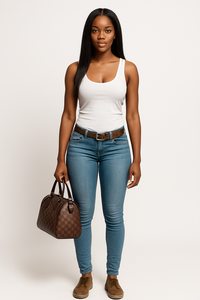
How to recreate the 2010s look today
- Early hipster: dark skinny jeans, a vintage T-shirt under a plaid flannel, knit beanie, ankle boots, statement scarf, no makeup, beachy waves.
- Normcore/Phoebe Céline: oversized beige trench, an oxford button-down, plain wide-leg trousers, white sneakers or square-toed flats, a structured neutral handbag, slicked-back hair.
- Athleisure: high-waisted leggings, a fitted sports bra or tank, an oversized zip hoodie, dad sneakers, a baseball cap, a slick high ponytail.
- Streetwear/Yeezy era: bike shorts under an oversized blazer, a fitted long-sleeve, chunky dad sneakers, a small structured handbag, nude full glam.
- Late-2010s Instagram: a slip dress and a denim jacket, white sneakers, contoured face, sleek long hair, statement choker.
Common identification mistakes
- vs. late 2000s: the same skinny jean spans both decades. Late 2000s = brighter, more neon American Apparel palette; early 2010s = muted hipster (mustard, burgundy, plaid, beanie).
- vs. early 2020s: the late 2010s loose silhouette and the 2020s wide-leg silhouette are similar. Logos (especially Balenciaga, Off-White, Yeezy) and dad sneakers are 2010s tells; cargo pants and Y2K revival are 2020s.
Upload a photo and the AI will tell you which decade it matches.